


Best Third Trimester Exercises for Birth Prep
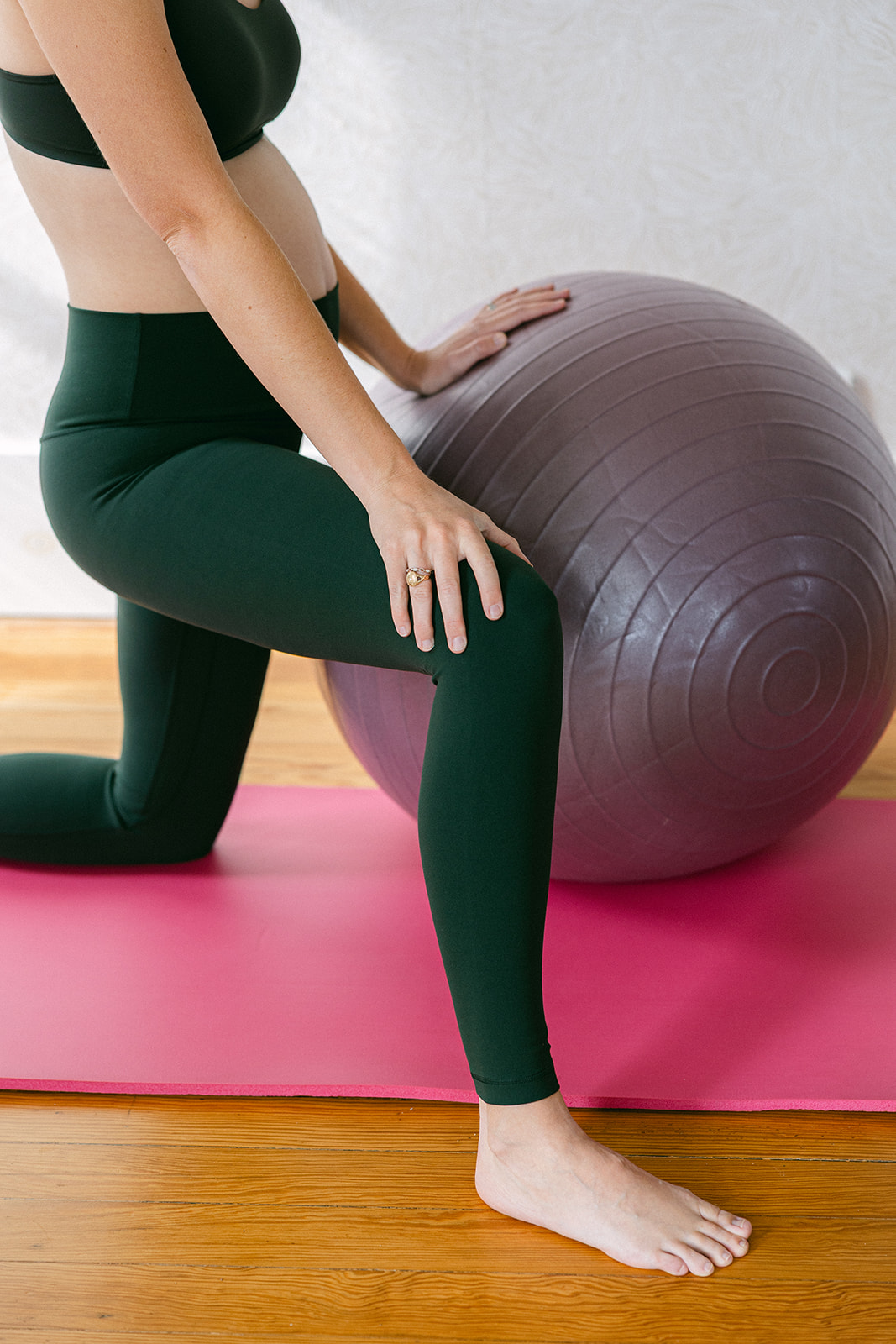
If you’re searching for third trimester exercises that actually support birth prep, you’re in the right place. As a pelvic floor physical therapist, I focus on movement that helps you feel strong, mobile, and confident heading into labor—especially exercises that support pelvic inlet, mid pelvis, and pelvic outlet opening, plus light strength training that prepares you for postpartum life.
Below are my top 5 third trimester exercises as a pelvic floor therapist—simple, effective, and easy to repeat.
1) 360 Breathing + Pelvic Floor Relaxation
In late pregnancy, many people benefit more from learning how to relax and coordinate the pelvic floor than from doing more squeezing. This breathing pattern helps reduce unnecessary tension and builds a key skill for labor.
How to do it
- Sit supported or lie on your side.
- Inhale through your nose and expand your ribs 360° (front/side/back).
- Let your pelvic floor soften and widen on the inhale (think “release”).
- Exhale slowly (like blowing through a straw) and return to neutral—no clenching.
Do: 5–8 slow breaths, 1–2x/day
2) Hands-and-Knees Pelvic Tilts + Yoga Block Under One Knee
Adding a yoga block under one knee introduces gentle pelvic asymmetry—often helpful for mid pelvis mobility and for practicing the type of pelvic movement that can feel great during labor.
How to do it
- Come to hands-and-knees (add a pillow under knees if needed).
- Place a yoga block (start at the lowest height) under one knee.
- Perform slow pelvic tilts:
- Inhale: belly softens, tailbone tips slightly up.
- Exhale: gently round and tuck.
- Switch the block to the other knee.
Do: 6–10 reps each side
Tip: Keep it subtle—this should feel like mobility, not a stretch contest.
3) Supported Deep Squat Hold
A supported squat is one of the best third trimester birth prep exercises because it encourages pelvic outlet opening and pelvic floor lengthening—without forcing range of motion.
How to do it
- Hold a countertop, door frame, TRX strap, or partner’s hands.
- Feet wider than hips, toes slightly out.
- Lower only to a depth where you can still breathe and relax.
- Keep jaw and shoulders soft.
Do: 20–45 seconds, 2 rounds
4) Wide-Knee Supported Child’s Pose
This supported stretch is a favorite for pelvic inlet opening and calming down a “busy” pelvic floor, especially if you feel tightness, pressure, or general third trimester discomfort.
How to do it
- Knees wide, big pillow/bolster under your chest.
- Sink hips back as tolerated.
- Breathe into your back ribs and imagine your pelvic floor melting downward.
Do: 60–90 seconds
5) Romanian Deadlift (RDL) to Row
If you want one strength move in the third trimester, make it this. The RDL to row targets your posterior chain—glutes, hamstrings, and upper back—which supports labor positions, posture, and postpartum carrying and feeding.
How to do it
- Hold light dumbbells or use a resistance band anchored under your feet.
- Stand hip-width, knees soft.
- Hinge by sending hips back (spine long, ribs stacked—no breath-holding).
- Add a row: pull elbows back, shoulder blades slide down and back.
- Stand tall by squeezing glutes.
Do: 8–10 reps, 2 sets
Breath cue: Exhale on effort (stand + row), inhale as you hinge.
Modify: Use one hand on a wall/chair for support or reduce range of motion if you feel pelvic pressure.
Third Trimester Exercise Safety Tips (Pelvic Floor PT)
Modify or stop if you notice:
- increasing vaginal heaviness/pressure
- leaking that worsens with activity
- sharp pelvic pain that lingers (SPD/pelvic girdle pain)
- dizziness, bleeding, or contractions that don’t settle with rest
Late pregnancy training should feel supportive—not depleting.
FAQ: Third Trimester Birth Prep + Pelvic Floor
Should I do Kegels in the third trimester?
Sometimes—but not by default. Many people need more relaxation + coordination first (breathing, lengthening, mobility). If you already feel tight, constipated, or have pain/pressure symptoms, more Kegels may increase tension. A pelvic floor PT can help you choose the right balance.
What if I feel pressure/heaviness during these exercises?
Scale down range of motion, add support, and avoid breath-holding. Choose lower-load options like side-lying breathing, supported child’s pose, or hands-and-knees work. If heaviness persists or worsens, consider a pelvic floor PT assessment.
How often should I do these third trimester exercises?
- Daily: #1 breathing + one mobility move (#2 or #4)
- 2–3x/week: add #3 supported squat + #5 RDL to row for strength
Ready for a Guided Birth Prep Plan (and Personalized Support)?
If you’re thinking, “This is helpful… but I want someone to tell me exactly what to do for my body,” you have two great options:
Option 1: Join the Release for Labor & Delivery Program in the Raise with Strength App
Inside the Raise with Strength app, the Release for Labor & Delivery Program is designed to help you:
- practice pelvic floor release and breathwork for labor
- use targeted mobility for pelvic inlet, mid pelvis, and outlet opening
- stay consistent with short, doable sessions (even when you’re tired)
- feel confident with positions and strategies you can actually use on birth day
Download the Raise with Strength App and join the Release for Labor & Delivery Program to follow a structured plan through your third trimester—so you’re not guessing, you’re preparing.
Option 2: Book an in-person, one-on-one appointment
If you want hands-on assessment and a plan tailored to your symptoms and goals, you can book an in-person 1:1 pelvic floor therapy birth preparation session with us. You’ll learn about:
- pelvic mobility exercises & massage techniques to prepare your body for birth
- labor positions and pushing prep specific to your body
- how to use exercise to optimize baby’s position
Learn more about our birth preparation sessions
(As always, check with your OB/midwife before starting a new exercise program.)


Comments will load here
Be the first to comment