


Rib Changes During Pregnancy
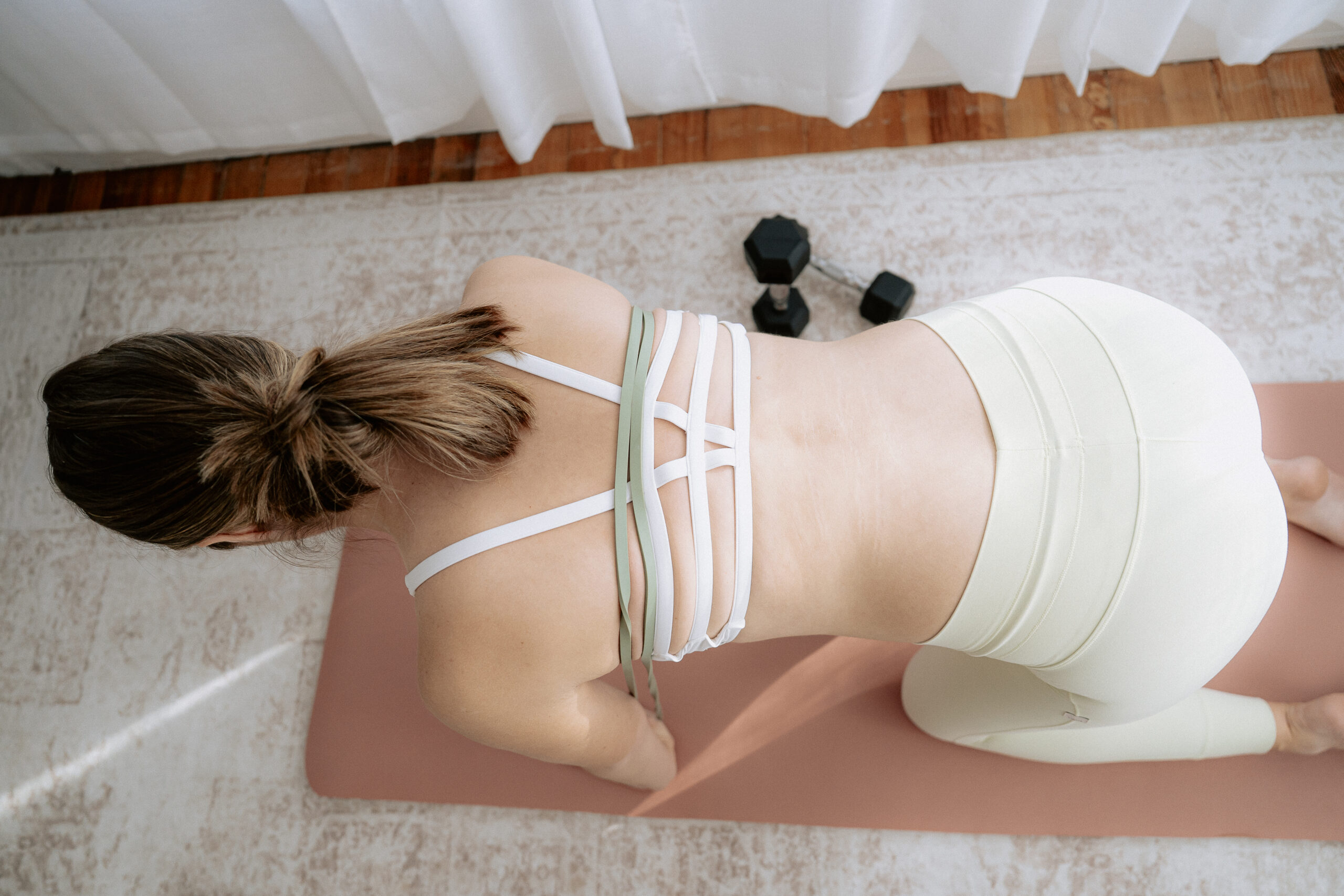
If your bra suddenly feels like it’s auditioning to be a tourniquet, you’re not imagining it—and it’s not always “just breast growth.” During pregnancy, your ribcage and breathing mechanics can shift in surprisingly real ways. The result? Your band size might increase, underwires can feel unbearable, and you may notice new rib or back discomfort that seems to come out of nowhere.
Let’s break down what’s happening, why it’s common, and how pelvic floor physical therapy can help you feel more comfortable during pregnancy and beyond.
Do Your Ribs Actually Change During Pregnancy?
Yes—rib and ribcage changes are a real thing in pregnancy. As your baby grows, your organs shift upward and outward to make room. Your diaphragm (the primary muscle that helps you breathe) also has less space to move downward the way it normally would.
To adapt, your ribcage may expand and “flare” outward, especially in the later trimesters. For some people, that expansion is subtle. For others, it’s noticeable enough that clothing and bras fit differently.
Common ways this can show up:
- A tighter band even in the “right” cup size
- Underwire suddenly feeling pokey or painful
- More tightness around the bra line
- Mid-back or upper back soreness
- Feeling like you can’t get a satisfying deep breath
Why Pregnancy Can Increase Your Bra Size (It’s Often Two Separate Changes)
When most people think “bra size increase,” they think cup size. But pregnancy can affect both parts of bra sizing:
1) Breast tissue growth (cup size)
Hormonal changes prepare your body for feeding, often increasing breast volume—sometimes early in the first trimester.
2) Ribcage expansion (band size)
As your torso adapts—through posture shifts, diaphragm movement changes, and rib flare—your band size can increase even if cup volume didn’t change much.
That’s why some people find themselves needing a larger band or using extenders, even before their cup size changes dramatically.
What Causes Ribcage Expansion?
A few factors work together:
Hormones and mobility changes
Pregnancy hormones (like relaxin) increase softness and mobility of connective tissue. This is helpful for childbirth, but it can also affect how joints and tissues throughout your body respond to load—including your ribcage and back.
Posture shifts and “rib flare”
As your belly grows, many bodies compensate by leaning back slightly, lifting the chest, and flaring the ribs. It’s not “bad posture”—it’s a common adaptation. But it can make your ribcage sit in a more expanded position, contributing to band tightness and discomfort.
Breathing pattern changes
With less room for the diaphragm to descend, many pregnant people shift into more upper-chest breathing. That can keep the ribs more lifted and the upper body more tense, sometimes feeding into rib pain or bra-line soreness.
Pressure and core changes
As your abdominal wall lengthens and your center of gravity changes, how you manage pressure through the trunk changes too. That pressure system includes more than abs—it includes the diaphragm, core, and pelvic floor.
How to Tell if It’s More “Ribs/Band” Than “Cup”
A few clues your band size (or rib position) may be the main issue:
- Your band feels tight even when the cups still seem to fit
- The band rides up in the back or shifts around more than it used to
- Underwire placement feels “off” (even in your usual size)
- You feel sore or restricted right along the bra line
Also: it can be both at once. Many pregnant people need a different band and a different cup over the course of pregnancy.
Where Pelvic Floor Therapy Comes In (Hint: It’s Not Just Kegels)
Pelvic floor therapy is often associated with postpartum recovery or leaking—but it’s just as relevant in pregnancy. That’s because your pelvic floor is part of a larger “pressure management” system that includes:
- Diaphragm (breathing muscle)
- Ribcage (mobility + structure for breathing)
- Deep core (support + coordination)
- Pelvic floor (support + pressure regulation)
When that system is out of sync—like when you’re stuck in rib flare, gripping your abs all day, or breathing shallowly—you may feel it in your ribs, back, pelvis, or all of the above.
How Pelvic Floor PT Can Help Rib Pain, Breathing, and Bra-Line Discomfort
A pelvic floor physical therapist can help you with:
Breathing mechanics (360° breathing)
Instead of everything happening in the upper chest, you learn to expand through the ribcage more evenly—front, sides, and back—without strain.
Rib positioning and mobility
Gentle strategies can reduce excessive rib flare, improve comfort, and help you breathe more efficiently with the space you do have.
Core-pelvic floor coordination
This isn’t about “tensing harder.” It’s about timing and teamwork—supporting your body without bracing or clenching.
Posture and movement support
You’ll learn pregnancy-specific shifts for things like standing, sleeping, lifting, and exercising so your body isn’t constantly fighting gravity.
Bonus: These Skills Matter Postpartum Too
The way you breathe and manage pressure during pregnancy can make a difference later. Many postpartum symptoms are tied to pressure management and trunk coordination, including:
- Persistent back or rib discomfort
- Abdominal “doming” or difficulty reconnecting with core after birth
- Pelvic heaviness/pressure
- Leaking with coughing, sneezing, or exercise
- Feeling unstable returning to workouts
Working with pelvic floor PT during pregnancy can make postpartum rehab feel less like starting from scratch.
Practical Bra Tips During Pregnancy
While your body is changing, comfort matters most. Consider:
- Bra band extenders (cheap and surprisingly helpful)
- Flexible cups or non-wired options
- Professional fittings each trimester if possible
- Swapping underwire for supportive soft-structure styles on high-discomfort days
And if a bra causes numbness, sharp pain, or significant shortness of breath, it’s worth adjusting sooner rather than later.
When to Book a Pelvic Floor Therapy Session
If you’re experiencing any of the following, pelvic floor therapy can help:
- Rib pain or bra-line soreness
- Back pain that’s new or worsening
- Feeling like you can’t take a deep breath
- Pelvic pressure or heaviness
- Leaking (urine or gas)
- Pain with sex
- Core “coning/doming” with movement
Ready for support?
If you’re having symptoms, you don’t have to just “wait it out.” Book a pelvic floor therapy session to get a personalized plan for breathing, core support, and comfort—during pregnancy and postpartum.


Comments will load here
Be the first to comment