


Pain Relief Techniques for an Unmedicated Labor
Planning an unmedicated labor can feel empowering—and intimidating. Many mothers want to know: How will I cope with the pain without medication? The good news is that your body is designed for birth, and there are effective, evidence-based pain relief techniques that can significantly reduce discomfort, increase your sense of control, and support labor progress.
As pelvic floor therapists working with clients in Cedar Park, Georgetown, Belton, and through virtual sessions across Texas, we help expectant mothers prepare their bodies and nervous systems for labor. Below are some of the most effective pain relief strategies for an unmedicated birth—and why they work.
Why Pain Relief Techniques Matter in Unmedicated Labor
Labor pain isn’t just physical—it’s neurological and emotional. When your body feels safe and supported, it releases oxytocin and endorphins, which help contractions work more efficiently and reduce pain perception. Many non-medicated techniques aim to:
- Decrease muscle tension (especially in the pelvic floor)
- Improve oxygen delivery
- Help baby descend and rotate
- Reduce fear and stress responses
Let’s break down the most helpful tools.
1. Breathing Techniques
Breathing is one of the most powerful—and underestimated—pain management tools during labor.
How breathing helps:
- Reduces activation of the fight-or-flight response
- Lowers muscle guarding in the pelvic floor
- Improves oxygen flow to you and baby
- Gives you something to focus on during contractions
Helpful breathing styles:
- Slow, deep breathing (in through the nose, long exhale through the mouth)
- Open-mouth exhale breathing (relaxed jaw = relaxed pelvic floor)
- Patterned breathing for intense contractions
Practicing these techniques ahead of time (with guidance from a pelvic floor therapist) can make them feel automatic during labor.
2. Changing Positions Frequently
Movement is one of the most effective ways to manage labor pain and support progress.
Why position changes work:
- Encourage optimal baby positioning
- Reduce pressure on specific tissues
- Improve pelvic outlet space
- Prevent prolonged muscle tension
Helpful labor positions include:
- Standing or slow dancing with a partner
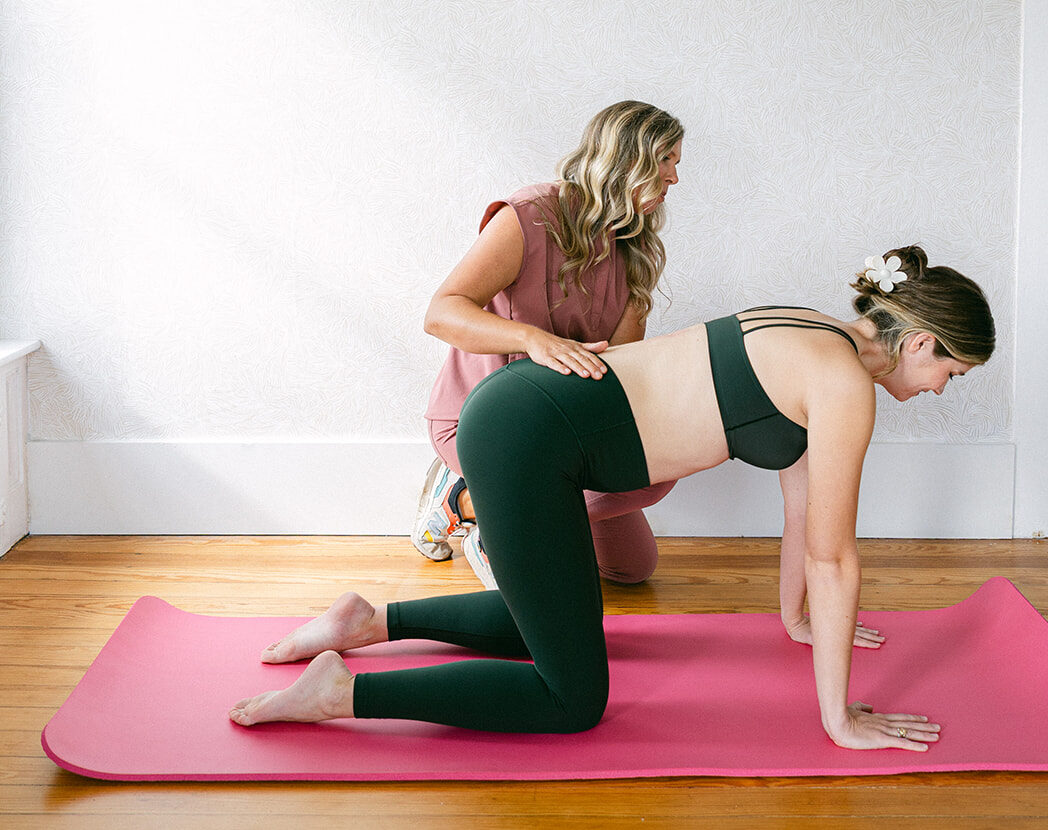
- Hands-and-knees or leaning forward
- Side-lying with support
- Squatting (supported)
- Using a birth ball or peanut ball
If you’re planning a hospital birth, ask your provider about mobility options so you can continue to change positions freely.
3. TENS Units (Transcutaneous Electrical Nerve Stimulation)
A TENS unit delivers mild electrical impulses through electrodes placed on the lower back.
How TENS helps in labor:
- Interferes with pain signals traveling to the brain
- Stimulates endorphin release
- Provides a sense of control (you adjust the intensity)
TENS units are often most effective during early and active labor, particularly for back labor. Many clients practice using them prenatally so they feel confident during labor.
4. Water Therapy (Showers & Tubs)
Water can be incredibly soothing during labor, whether it’s a warm shower or a birthing tub.
Benefits of water during labor:
- Reduces gravity-related pressure
- Promotes muscle relaxation
- Decreases perception of pain
- Encourages rhythmic movement
Even if a water birth isn’t part of your plan, spending time in the shower during contractions can provide significant relief.
5. Counterpressure & Hands-On Support
Counterpressure involves firm, sustained pressure applied to areas like the lower back, hips, or sacrum during contractions.
Why counterpressure works:
- Helps relieve back labor pain
- Provides sensory input that competes with pain signals
- Encourages pelvic mobility and baby rotation
Tools and techniques may include:
- Partner-applied hip squeezes
- Tennis balls or massage tools
- Rebozo or scarf techniques
Many partners feel empowered when they know how to help—and pelvic floor therapy can teach these techniques ahead of time.
How Pelvic Floor Physical Therapy Can Help You Prepare
Pelvic floor therapy during pregnancy isn’t just about postpartum recovery—it can be a powerful part of birth preparation. We help clients:
- Learn effective breathing and relaxation strategies
- Practice labor positions that protect the pelvic floor
- Reduce fear-related muscle tension
- Improve confidence heading into birth
We offer in-person pelvic floor therapy in Cedar Park, TX, Georgetown, TX, and Belton, TX, as well as virtual pelvic floor therapy for clients anywhere in Texas.
Want a Guided Way to Prepare at Home?
In addition to working one-on-one with a pelvic floor therapist, many clients benefit from structured, at-home preparation. The Raise with Strength App includes the Release for Labor program, designed to help you:
- Practice pelvic floor relaxation
- Learn breathing techniques for labor
- Improve mobility in the hips and pelvis
- Feel more confident using pain relief strategies during contractions
This program is a great option if you’re preparing for birth between visits—or if you’re looking for expert guidance while planning an unmedicated labor from home.
Final Thoughts
Unmedicated labor doesn’t mean unmanaged labor. With the right tools, education, and support, many people find they can cope with labor pain more effectively than they expected. Breathing, movement, TENS units, water, and counterpressure all work with your body—not against it.
Whether you choose in-person care, virtual pelvic floor therapy in Texas, or guided preparation through the Raise with Strength App, support is available to help you feel informed, confident, and prepared for birth.
Ready to Prepare for Birth?
- In Central Texas? We offer pelvic floor physical therapy in Cedar Park, Georgetown, and Belton.
- Anywhere in Texas? Virtual pelvic floor therapy makes expert care accessible from home.
- Want guided prep on your own schedule? Join the Raise with Strength App and start the Release for Labor program today.
You deserve preparation that supports your body—and your birth goals.


Comments will load here
Be the first to comment