


Perineal Massage to Prevent Tearing During Birth
Expecting a baby and hoping to reduce your risk of tearing during childbirth? You’re not alone—this is one of the most common questions women ask during pregnancy. While no method can completely prevent tearing, research shows that perineal massage in the final weeks of pregnancy can significantly reduce the risk of severe tears, especially for first-time moms.
As pelvic floor therapists serving women in Cedar Park, Georgetown, Belton, and virtually anywhere in Texas, we regularly teach this technique as part of our birth preparation appointments.
What Is Perineal Massage?
Perineal massage is a gentle stretching technique that targets the tissue between the vaginal opening and anus (the perineum). Beginning around 36 weeks of pregnancy, this practice helps the perineal tissue become more flexible and better able to stretch during delivery.
Does Perineal Massage Prevent Tearing?
While minor tears can still occur, studies show several meaningful benefits:
1. Reduced Risk of Severe (3rd–4th Degree) Tears
Women—especially first-time moms—experience fewer complex tears when performing perineal massage.
2. Improved Stretching Ability of Perineal Tissues
More elastic, flexible tissue is better able to accommodate crowning.
3. Less Perineal Pain After Birth
Many women report less postpartum soreness and discomfort when massage is performed consistently.
4. Better Pushing Experience
Massage helps you become familiar with the stretching sensation, reducing fear and tension during labor.
5. Relaxation of the Pelvic Floor
A tight pelvic floor can make pushing more difficult. Massage encourages the muscles to soften and respond.
Who Benefits Most From Perineal Massage?
Perineal massage offers the greatest benefits for:
- First-time moms (or those attempting a VBAC)
- Women with pelvic floor tightness or pain
- Moms wanting to reduce the need for episiotomy
- Those with anxiety around tearing or crowning
- Anyone aiming for a smoother vaginal delivery
How to Perform Perineal Massage: Step-by-Step
When to Begin
Start around 36 weeks and aim for 5–10 minutes, 3–4 times per week.
Step-By-Step Technique
- Wash your hands and get comfortable (semi-reclined works well).
- Apply a natural lubricant such as coconut oil or vitamin E oil.
- Insert one or two thumbs about 1–1.5 inches into the vaginal opening.
- Press downward and outward gently until you feel a slight stretch.
- Hold 30–60 seconds, then massage in a slow “U” motion.
- Breathe deeply and relax your pelvic floor during the stretch.
A pelvic floor therapist can teach this technique and ensure you’re doing it safely and effectively.
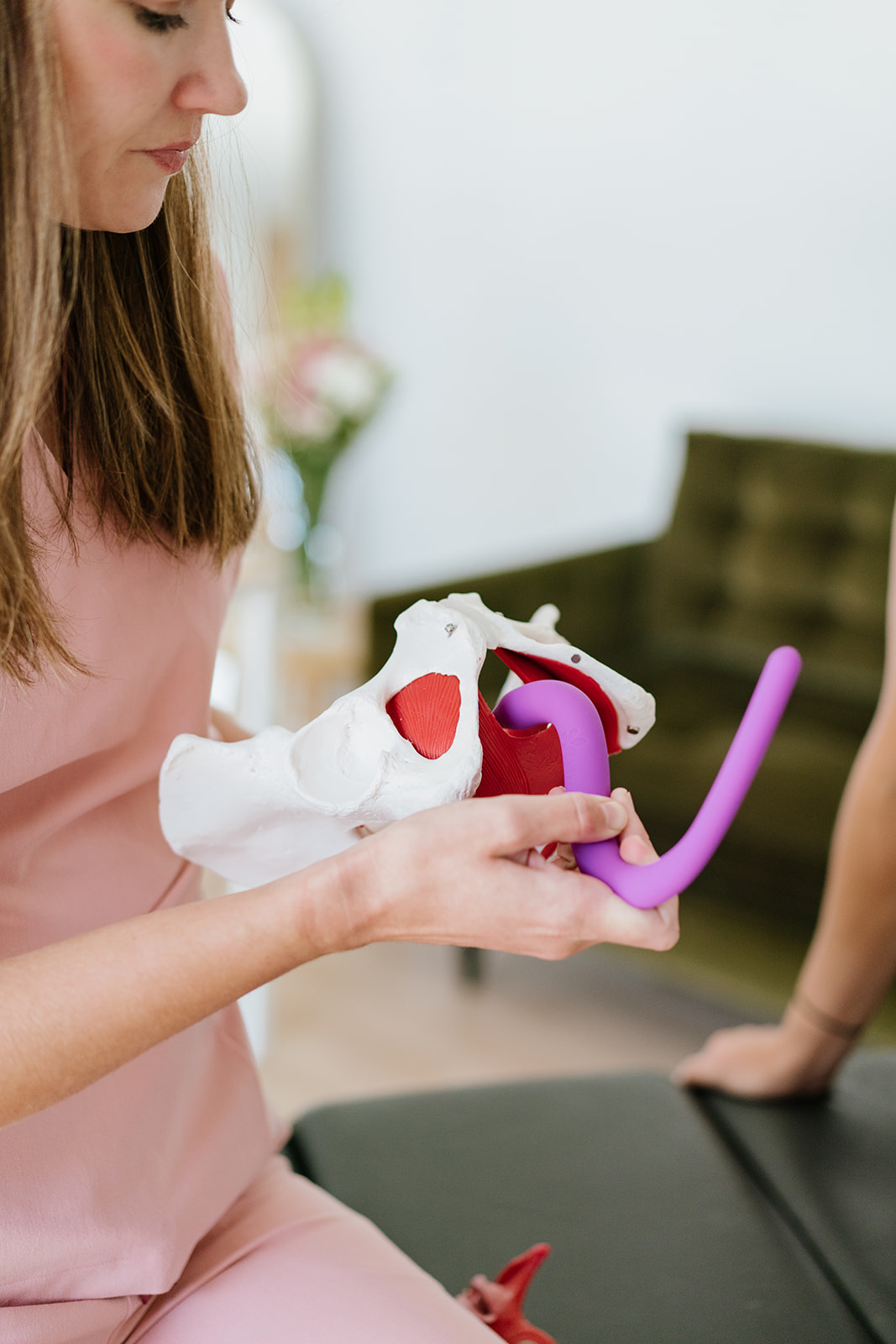
Having Trouble Reaching? A Pelvic Wand Can Help.
Many pregnant women find manual perineal massage challenging—especially in the third trimester. If reaching is uncomfortable or impossible, a pelvic wand can be a safe and effective tool.
Benefits of Using a Pelvic Wand
- Helps you reach the perineum comfortably
- Allows better control over pressure and angles
- Can be used with guidance from a pelvic floor therapist
- Great for women with mobility limits, a shorter reach, or increased abdominal size late in pregnancy
How to Use a Pelvic Wand for Perineal Massage
- Choose a smooth, medical-grade pelvic wand.
- Apply a water-based lubricant to the wand.
- Insert the curved end 1–1.5 inches into the vaginal opening.
- Press gently downward and outward, just as you would with your thumb.
- Move in a slow “U” shape while staying relaxed and breathing deeply.
We recommend using the Intimate Rose Pelvic Wand to our clients in clinic
When Should You Avoid Perineal Massage?
Do not perform perineal massage if you have:
- A vaginal infection (yeast, BV, STI, etc.)
- Placenta previa or have been placed on pelvic rest
- Unexplained vaginal bleeding
- Pain or discomfort during the technique
If you’re unsure, consult your OB, midwife, or pelvic floor therapist.
Pelvic Floor Therapy + Perineal Massage = Stronger Birth Prep
Perineal massage is just one part of preparing your body for birth. In our pelvic floor therapy sessions—offered in Cedar Park, Georgetown, Belton, and virtually across Texas—we may also work on:
- Pelvic floor relaxation and lengthening
- Proper pushing mechanics
- Pelvic mobility and hip flexibility
- Nervous system regulation for labor
- Gentle internal pelvic floor work (if desired)
- Partner education for labor support
This holistic preparation supports a smoother birth and faster postpartum healing.
Frequently Asked Questions About Perineal Massage
Does perineal massage really reduce tearing?
Yes—research supports a significant reduction in severe tearing, especially for first-time vaginal delivieries.
Is perineal massage painful?
It shouldn’t be. You may feel stretching or pressure, but not sharp pain.
Can my partner help with perineal massage?
Absolutely, and many women prefer partner-assisted massage. A pelvic floor therapist can teach both of you how to do it correctly.
How often should I do perineal massage?
Most women benefit from 3–4 sessions per week starting around 36 weeks – sooner if you have a known history of pelvic floor tension.
Prepare Your Pelvic Floor for Birth in Texas
Our pelvic floor specialists offer one-on-one, hands-on birth preparation sessions in:
🌸 Cedar Park, TX
🌸 Georgetown, TX
🌸 Belton, TX
🌸 Virtual pelvic floor therapy sessions anywhere in Texas
If you want professional guidance on perineal massage—or a personalized pelvic floor plan to help reduce tearing—we’re here to support you every step of the way.
Want Guided Birth Preparation from the comfort of your home? Try the Release for Labor Program.
For moms who want expert-led, step-by-step guidance—not just for perineal massage, but for your entire pelvic floor birth prep plan—we offer the Release for Labor online program.
🌸 What You’ll Learn in Release for Labor
- Pelvic floor relaxation techniques
- Birth-positioning strategies
- Perineal massage instruction
- Breathwork for labor
- Guided mobility and soft tissue work
- Nervous system regulation for a calmer birth
This program is ideal if you want professional pelvic floor support but can’t attend in person—or simply prefer to prepare on your own schedule.
📲 Available on the Raise With Strength App
You can purchase Release for Labor directly through the Raise With Strength app and start preparing for birth with confidence today.


Comments will load here
Be the first to comment